
Wichita, Kansas. — The search for Wichita’s next city manager, already a high-stakes referendum on the city’s future, experienced a seismic shift Saturday morning. The City of Wichita confirmed that Assistant City Manager Donte Martin, the internal favorite and a 25-year veteran of City Hall, has withdrawn his name from consideration.
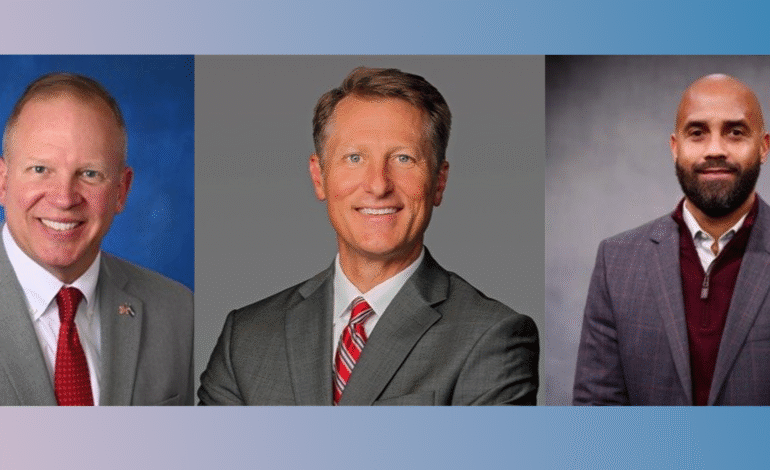
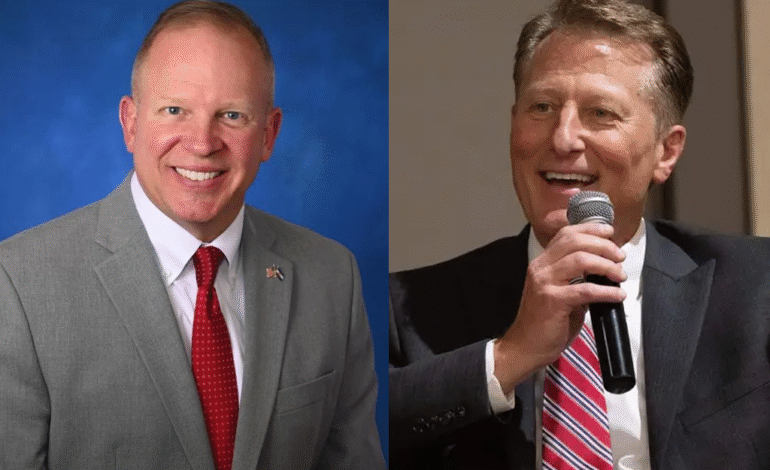
The announcement, delivered with a sparse statement and no official reason, abruptly ends the possibility of a seamless administrative handover from retiring City Manager Robert Layton. Martin’s exit strips away the “continuity” option, forcing the City Council to choose between two external finalists who offer starkly different visions for the city’s leadership: Mark Freitag, a command-style technocrat with a history of infrastructure ambition and legislative friction, and Dennis Marstall, a collaborative regionalist grappling with the pains of hyper-growth.
With Layton set to depart on December 31, the Council must now navigate a choice not just between two men, but between two distinct theories of governance.
The Collapse of the “Heir Apparent”
While the city’s official stance on Martin’s withdrawal is “no comment,” the move comes after weeks of mounting friction that exposed a fatal disconnect between the established bureaucracy and the new political reality of City Hall.
Martin, who rose from a neighborhood assistant to Assistant City Manager, was viewed by many as the logical successor to Layton. However, in an election cycle defined by a hunger for change, his proximity to the outgoing administration morphed from an asset into a liability. Public sentiment has increasingly favored a “fresh perspective” over “another Robert Layton,” burdening Martin with the baggage of the past sixteen years.
The cracks in Martin’s candidacy became visible during a tense November 6 City Council meeting regarding the “Violence Interrupters” program. When pressed by Mayor Lily Wu for monthly data reporting, Martin defaulted to traditional bureaucratic timelines, stating reports were quarterly and didn’t align with the city’s schedule. Mayor Wu’s rebuttal was sharp: “I really believe that being data informed requires us to actually have full data… I would not like to see annual data, but rather monthly.”
In that moment, the misalignment was laid bare: a Mayor demanding real-time, granular accountability, and an administrator defending the sluggish cadence of the status quo.
Martin’s viability took another hit during the November 18 public forum. When a resident attempted to question him about “Flock Safety” cameras—a controversial surveillance technology—Martin reportedly walked away immediately upon hearing the topic. For a Council seeking a manager who embodies “integrity, trust, and transparency,” this refusal to engage likely signaled that the internal culture of insularity remained too strong to break from within.
The Commander: Mark Freitag
With the internal option removed, the spotlight turns to Mark Freitag. A former Army Colonel and Garrison Commander of Fort Hood, Freitag brings a resume heavy on “hard power.” His tenure as City Manager in Janesville, Wisconsin, and Westminster, Colorado, paints a picture of a decisive executive focused on massive capital projects.
However, his recent two-year stint in Westminster serves as a warning flare for the Wichita Council. Freitag championed a $600 million water treatment facility that triggered a ratepayer revolt, with residents describing the financial burden as “bridal larceny” and “white collar crime.”
More concerning for a Wichita Council intent on asserting its oversight is the “unauthorized survey” scandal that marred Freitag’s final months in Westminster. In early 2024, residents received a survey regarding tax increases for fire stations—a survey the City Council had not approved. Council members were blindsided, calling the move “bizarre” and a “sore point,” indicating a manager willing to bypass elected officials to pursue his own policy agenda.
Freitag resigned suddenly in July 2024 without public explanation, leaving behind a fractured relationship with his governing body. Furthermore, local watchdogs in Wichita noted during the vetting process that Freitag did not employ an internal auditor in his previous two cities—a critical gap for a candidate promising financial stewardship.
The Collaborator: Dennis Marstall
The alternative is Dennis Marstall, currently the County Administrator for Lancaster County, South Carolina. A Kansas native and Kansas State University graduate, Marstall represents the “soft power” approach.
Marstall’s recent experience in Lancaster County has been defined by managing explosive population growth, which surged from 66,000 to over 110,000. His handling of a critical fire service shortage offers a sharp contrast to Freitag’s style. Facing a 1,000% increase in call volumes and a collapsing volunteer system, Marstall did not attempt to force a solution. Instead, he launched a “doomsday” public education campaign, transparently warning residents of “pockets of pain” where response times would fail, and built a “consensus-supported fire service growth plan.”
While Marstall lacks experience managing a city the size of Wichita, his approach to governance appears far more aligned with the current Council’s demands. At the Wichita public forum, when asked about the “Flock” surveillance system, Marstall admitted he didn’t know the specific local details but committed to a comprehensive analysis—a “let’s find out” response that contrasted sharply with Martin’s avoidance.
The Outlook: A Choice of Identity
As the City Council prepares for final deliberations, the choice has clarified.
If the Council prioritizes aggressive infrastructure execution and hierarchical discipline, Mark Freitag is the candidate. However, his history suggests this comes at the cost of friction with the Council and potential alienation of the public.
If the Council prioritizes consensus building, transparency, and a “Kansas-native” understanding of the local culture, Dennis Marstall is the frontrunner. His challenge will be proving he can scale his county-level success to a major metropolitan operation.
Martin’s withdrawal has cleared the field of the status quo. The City of Wichita will have a new outsider at the helm in 2026. The only question remaining is whether that leader will be a commander who gives orders, or a diplomat who builds bridges.