Wichita City Manager Decisive Moment: A Profile of the Three Finalists Vying to Lead Wichita

After a seven-month national search that attracted 89 applicants, the City of Wichita has officially named the three finalists for its most critical leadership role: City Manager. The announcement on November 10, 2025, sets the stage for the most significant transition in municipal leadership in nearly two decades, as the city prepares to replace retiring City Manager Robert Layton, whose tenure spanned 17 years.
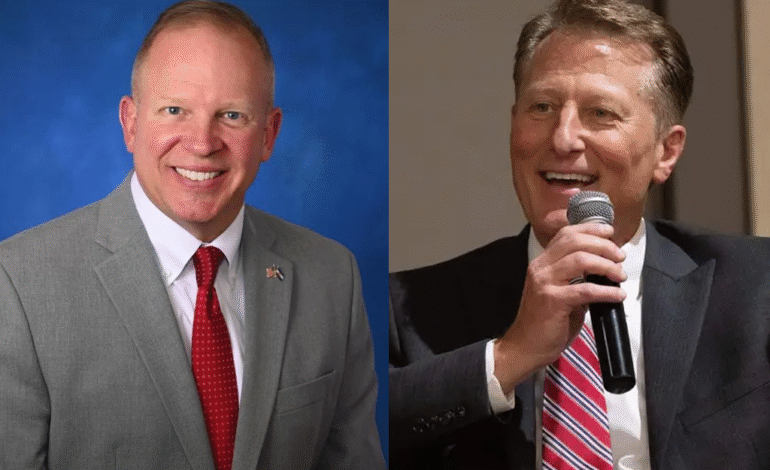
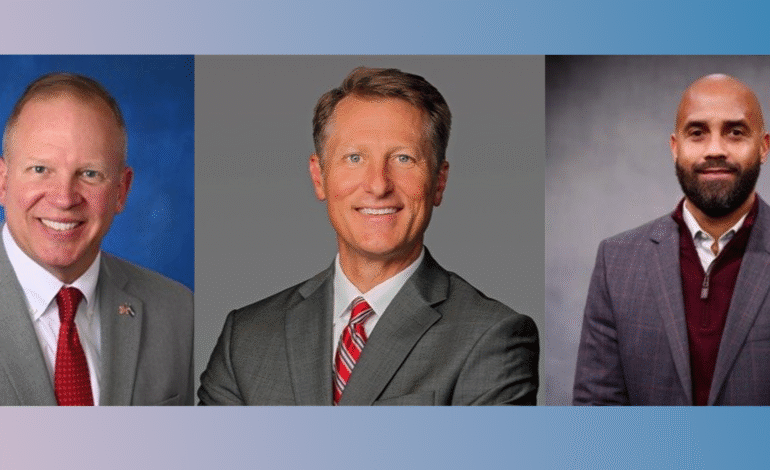
The finalists are Mark Freitag, the former Chief Administrative Officer of Westminster, Colorado; Dennis Marstall, the County Administrator of Lancaster County, South Carolina; and Donte Martin, a current Assistant City Manager for the City of Wichita.
The decision now before the City Council represents a stark choice between three distinct leadership philosophies, each offering a different answer to the generational challenges awaiting the new executive. The appointee will immediately inherit a complex portfolio: navigating a looming 2026 budget deficit , overseeing more than $800 million in “generational” infrastructure projects , and executing a clear public mandate to restore “integrity, trust, and transparency” , particularly within public safety.
As the public prepares to meet the candidates at a community forum on November 18 , here is an in-depth look at the three individuals in contention to become the chief executive of Kansas’s largest city.
Mark Freitag: The Infrastructure Specialist
Mark Freitag presents himself as the experienced executive engineer, a leader with a background in military command and a proven, tangible record of managing the exact type of “generational” projects that define Wichita’s current ambitions.
A graduate of West Point Military Academy with master’s degrees in Management and National Security Strategy , Freitag’s career is built on executive-level operations. He served in U.S. Army command positions, including as the CEO of the U.S. Army Garrison at Fort Hood, before transitioning to municipal government. He spent nine years as the City Manager of Janesville, Wisconsin , where he managed a $129 million budget and oversaw the city’s 2020 budget process.
The Case for Freitag: Freitag’s strongest selling point is his most recent tenure as the Chief Administrative Officer (CAO) of Westminster, Colorado. His resume reads as if it were custom-built to address Wichita’s Capital Improvement Program.
In his resignation letter from Westminster, Freitag highlighted his primary achievement: beginning “two generational investments in Westminster’s infrastructure”. Specifically, he led the project to build a new drinking water facility—a direct parallel to Wichita’s $500 million Northwest Water Treatment Facility—and a new municipal courthouse. The City of Westminster also credited him with an “ambitious reorganization” that “streamlined city operations… to improve service to residents and lower operational cost”.
For a city focused on executing massive, complex public works , Freitag is, on paper, the “infrastructure candidate.”
The Complication: Freitag’s compelling experience is complicated by the circumstances of his departure from Westminster. He resigned abruptly in July 2024, after only two years on the job.
While official statements from both Freitag and the city noted his accomplishments, the precise reason for his exit “remains unclear”. However, his resignation came immediately “after the recent rejection by City Council of a city staff proposed to shrink Westminster Hills Open Space dog park from 470 acres to 33 acres”.
This context suggests a potential failure to build a stable coalition with his council, a critical skill demanded by the Wichita job description. Compounding this, Freitag was originally hired on a split 5-2 vote, indicating he may have lacked unified council support from the start. The Wichita City Council must now determine if he is a decisive change agent who faced political headwinds or a leader who struggled with the collaborative aspect of the post.
Dennis Marstall: The Fiscal Administrator with Kansas Roots
Dennis Marstall is the “best of both worlds” candidate: an external administrator with a fresh perspective, but one who comes with deep Kansas roots and local government experience. This unique blend mitigates the risks of an “outsider” hire and positions him as the data-driven fiscal expert.
Marstall is a graduate of Kansas State University and holds a Master of Public Administration from the University of Louisville. His career includes extensive experience in a major U.S. city, Charlotte, North Carolina, where he worked in the budget and economic development offices and served for nearly a decade as the Mayor’s Chief of Staff.
Crucially, he returned to his home state from 2019 to 2021 to serve as the Assistant City Manager in Manhattan, Kansas. In that role, he was the city’s liaison to Kansas State University and the consolidated city-county police agency —direct experience with two of Wichita’s most complex institutional relationships.
The Case for Marstall: Marstall is currently the County Administrator for Lancaster County, South Carolina, and his tenure there directly addresses Wichita’s most immediate crisis: the 2026 budget deficit.
His record on fiscal management is exemplary and externally validated. For the Fiscal Year 2026 budget, Marstall presented a $159.7 million budget that accomplished what seems politically impossible:
It included no increase in the operating tax rate. It funded 28 new full-time positions, including new public safety personnel. It funded a 5% across-the-board salary increase for all employees. It raised the county’s minimum wage to $15 per hour.
For this, Lancaster County received the Government Finance Officers Association’s (GFOA) Distinguished Budget Presentation Award , a national certification of excellence in financial planning and transparency.
He has also advanced major public safety infrastructure projects, including a new detention facility and coroner’s office, and completed a comprehensive roadway funding study for a 2025 ballot measure. Marstall represents the professional, data-driven, and “safe pair of hands” model.
The Complication: Marstall’s profile is the least complicated of the three, presenting as a low-risk, high-reward public administrator. His primary challenge will be to prove that his experience in a South Carolina county and a smaller Kansas city is sufficient to scale up to the size and complexity of Wichita’s $742 million budget and its unique political dynamics.
Donte Martin: The Institutional Insider
Donte Martin is the only candidate who needs no introduction to City Hall. As the sole internal finalist, he represents continuity, stability, and an unparalleled 25-year understanding of the city’s intricate operations.
A “triple-Kansas” native, Martin holds a bachelor’s degree from Wichita State University (1996), a Juris Doctorate from Washburn University (1999), and a master’s degree from Fort Hays State (2017). His career is a textbook climb through the city’s ranks: he started as a Neighborhood Assistant in 2000 , was appointed Assistant to the Court Administrator in 2005 , and was promoted to lead the department as Court Administrator in 2010. In 2017, he was named Assistant City Manager, earning the promotion after a national search.
The Case for Martin: Martin’s supporters will argue that his tenure as Court Administrator is proof that he is not just an insider, but a proven reformer. In that role, his accomplishments were significant and progressive: he successfully reduced jail commitments, implemented a mental health court, expanded the city’s drug court, and created a comprehensive driver’s license amnesty program that “served as a model for other jurisdictions”. He also played a key role in merging city and county code enforcement.
As Assistant City Manager, he has been a visible leader, managing complex files and presenting to the council on everything from the city’s Violence Interrupters Program to the post-incident analysis of the massive Brookhollow Fire.
In a time of major transition, Martin is the only candidate who requires no learning curve. He knows the budget, the department heads, and the political players. His case is that he is the “insider who knows how to reform the inside.”
The Complication: Martin’s greatest strength—his 25-year tenure—is also his greatest political liability. For a city that explicitly defined its “ideal candidate” as a “visionary leader” who “embodies integrity, trust, and transparency” , Martin is inextricably linked to the outgoing administration and its controversies.
This is crystallized in a 2021 lawsuit filed by three former WPD deputy chiefs. The suit, which a federal judge has since dismissed , contained a damaging allegation: that Martin and City Manager Layton “wanted Captain Nicholson to be given a ‘break’ so he could attend a top-level FBI school” despite an ongoing investigation and reservations from senior command.
While the case was dismissed, the allegation itself directly conflicts with the narrative of transparency and reform. This, combined with some public sentiment favoring a “new person” with a “new perspective” , creates Martin’s central challenge: he must convince the council and the public that he is the reformer from his Court Administrator days, not a perpetuator of the “good old boy” culture the lawsuit alleged.
The Path Forward
The City Council’s choice will send a powerful signal about Wichita’s future. It is a choice between specialized infrastructure expertise (Freitag), proven fiscal discipline (Marstall), or institutional stability (Martin).
The public will have its only chance to see the candidates side-by-side at the Community Forum on Tuesday, November 18, 2025, from 5:30 p.m. to 9 p.m. in Lotus Hall at Botanica.
Following the forum, the City Council will conduct final interviews during the week of November 17. A final decision is expected shortly thereafter, as the city aims to have its new leader in place to ensure a smooth transition before Robert Layton’s official retirement on December 31, 2025.